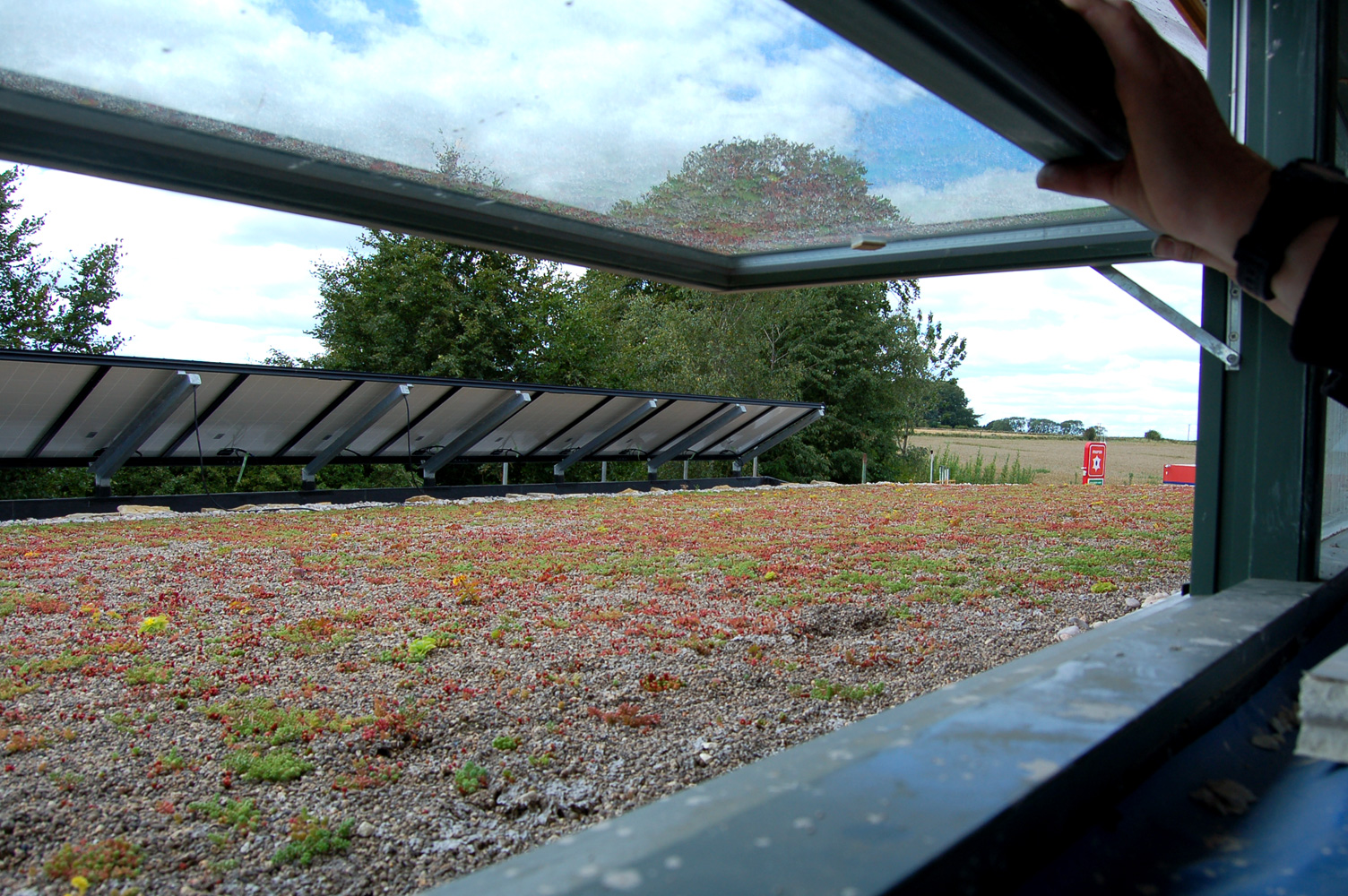
A green roof — also called a vegetated or living roof — is a roofing system in which the waterproof membrane is covered with a growing medium and vegetation layer. In Canadian construction, green roofs appear on both new commercial buildings and residential retrofits, driven by municipal stormwater management requirements, energy performance targets, and urban heat island mitigation strategies.
Extensive vs. Intensive Systems
The fundamental distinction in green roof design is between extensive and intensive assemblies. Extensive systems use a shallow growing medium — typically 75 to 150 mm — planted with drought-tolerant succulents such as sedum species. They are lightweight, generally accessible only for maintenance, and suited to low-pitched or flat roofs. Intensive systems use deeper growing media, sometimes exceeding 300 mm, supporting a wider range of plants including shrubs and small trees. They are significantly heavier and typically require structural reinforcement.
- Growing medium depth: 75–150 mm
- Saturated weight: 60–150 kg/m²
- Plants: sedum, moss, herbs
- Maintenance: low — 1–2 visits per year
- Accessible: maintenance access only
- Growing medium depth: 200–600+ mm
- Saturated weight: 180–500+ kg/m²
- Plants: perennials, shrubs, small trees
- Maintenance: moderate to high
- Accessible: usable green space
Assembly Layers and Components
A standard green roof assembly, from the structural deck upward, consists of the following layers: vapour control layer, insulation, waterproofing membrane (root-resistant or with a separate root barrier), protection layer, drainage layer, filter fabric, growing medium, and vegetation. In Canadian practice, the waterproofing membrane is the most critical component given freeze-thaw cycling and the consequences of failure.
Drainage layers in Canadian green roofs are designed to manage the high-intensity rainfall events common in many Canadian cities while also retaining sufficient moisture during dry periods to support plant survival. Engineered drainage mats with defined water retention and drainage rates are standard in commercially specified systems.
Growing media for Canadian green roofs are specified by weight, drainage rate, organic content, and particle size distribution. Lightweight mineral aggregates — expanded shale, expanded clay, or crushed brick — form the bulk of the medium, with organic matter typically kept below 10% to reduce compaction and nutrient leaching risk.
Climate Zone Considerations
Canada spans multiple climate zones defined by the NBC, and green roof performance varies accordingly. In the humid continental climates of southern Ontario and Quebec, growing media must handle significant freeze-thaw cycling, and sedum species selection should prioritise cold-hardiness to USDA Zone 4 or lower. In the more moderate coastal climate of metro Vancouver, a broader plant palette is available, but fungal disease pressure and persistent moisture require different drainage detailing compared to prairie regions.
Prairie cities such as Calgary and Edmonton present the greatest challenge for extensive green roofs: low humidity, high UV exposure, and significant wind loading. Drought-tolerant native species — including some prairie succulents and mat-forming grasses — have been trialled in local projects, and the City of Calgary's climate-adapted plant list provides guidance for practitioners.
Snow load management is an important design consideration for intensive systems in all Canadian climate zones. The structural engineer of record must account for the combined load of saturated growing medium and accumulated snow, which can exceed 600 kg/m² on intensive roofs in high-snowfall areas.
Structural Implications
Adding a green roof to an existing building requires a structural assessment to determine whether the existing roof assembly can support the additional dead load and live load. Extensive systems impose a relatively modest additional load that many flat-roofed commercial buildings constructed in the past 30 years can accommodate. Intensive systems almost always require structural reinforcement or are designed into the building from the outset.
The National Building Code and provincial structural codes apply to green roof additions. Engineers typically model the system as a uniform distributed load calculated from the saturated weight of the full assembly at maximum water retention.
Stormwater Management Benefits and Municipal Programs
Stormwater management is a primary driver of green roof adoption in Canada's larger cities. Green roofs retain a portion of rainfall in the growing medium, releasing it gradually through evapotranspiration. This reduces peak flows into municipal storm sewer systems during high-intensity events, which is a documented concern in cities with combined sewer systems.
The City of Toronto's green roof bylaw, adopted in 2009, requires green roofs on new commercial, institutional, and residential buildings above a certain size threshold. Toronto also maintains a grant program for voluntary green roof installation on eligible buildings. The City of Vancouver and the City of Ottawa have also incorporated green roof requirements or incentives into their sustainability programs. Practitioners should consult the relevant municipal planning department for current requirements and incentive amounts, as these change periodically.
In Toronto, the Green Roof Bylaw requires coverage of a percentage of the Available Roof Space — a defined area calculation — on new buildings above 2,000 m² in gross floor area. The required coverage percentage varies by building type and size.
Energy Performance Contributions
Green roofs contribute to building energy performance primarily by reducing cooling loads in summer through evapotranspiration, which lowers the surface temperature of the roof membrane, and through the insulating effect of the growing medium. Modelling studies have documented cooling energy reductions for buildings in Canadian cities, with the effect most pronounced in urban areas with high ambient temperatures and in buildings with significant roof-to-floor area ratios.
The heating season contribution of a green roof is less straightforward. The insulating value of the growing medium provides some benefit, but saturated or frozen medium has different thermal properties than dry medium, and the net annual energy benefit depends heavily on climate, building type, and existing insulation levels.